Read
Small Family Farms Aren’t the Answer
heated.medium.com
Read this viewpoint alongside the farm examples, considering the relationship between a farming approach, its scale, and what it is expected to provide.
Open resource Living LandscapesDESIGN
Module 19 / 25
Larger sites raise questions about how production, access, habitat, and ongoing work can be organized over a greater area. This module examines farming approaches and perennial systems, then returns to zones as a way to consider different uses and levels of management.
The farm readings and examples invite comparison of their priorities and practical demands. The book selections connect those choices with livelihoods, while the zone and wildlife resources help you consider how harvesting, care, and habitat relate at the scale of your own design.

What you’ll learn
Use your own copy, buy the book, or borrow it through a library when possible. If you are local to me, contact me about borrowing a copy. You can also contact me for information about digital or other access to assigned readings.
If your edition uses different page numbers, contact me and we can match the correct section.
For articles, excerpts, videos, and other resources, use the links in the lesson. If a video player does not load, try its source link. If you cannot access a reading or media resource, or it has no link, contact me with the module number and resource title.
Ask about books, readings or media access ↗Read
heated.medium.com
Read this viewpoint alongside the farm examples, considering the relationship between a farming approach, its scale, and what it is expected to provide.
Open resourceWatch
YouTube
Use this example to consider the work, tools, and management involved in running a farm.
If the player does not load, use the source link.
Read
permaculture.org.uk
Open resourceThe farm examples lead to questions about what a system produces and the work that supports it. Read the perennial-cropping selections alongside the livelihoods material to consider both parts of that relationship.
Book reading
Mark Shepard
end of Chapter 1, start at “Birds flew in and around the branches of the trees”
Chapter 6: The perennial-cropping case
Chapter 7: Begins with “Identify Your Biome” and moves to economic species and system assembly
Chapter 17, “Making a Profit” — optional further reading for farm-scale interests
Book access & editionsBook reading
Jessi Bloom and Dave Boehnlein
Pages 291 to 295: income from acres
Use current local costs and prices for your own estimates.
Book access & editionsModule 7's Zone 1 and Zone 2 videos compared placement with the frequency of visits and care. Use the same comparison for the Zone 3, 4, and 5 examples, considering access, harvesting, wildlife habitat, and maintenance.
Watch
YouTube
Consider how food production and wildlife habitat relate in the design, alongside the zone resources that follow.
If the player does not load, use the source link.
Watch
YouTube
Compare the uses and care shown in this Zone 3 example with your plan.
If the player does not load, use the source link.
Watch
YouTube
Continue the comparison by looking at how management and access relate to the uses of Zone 4.
If the player does not load, use the source link.
Watch
YouTube
Consider the place of Zone 5 in the whole design and its relationship to the more intensively managed areas.
If the player does not load, use the source link.
Read
Oregon State University
Open resource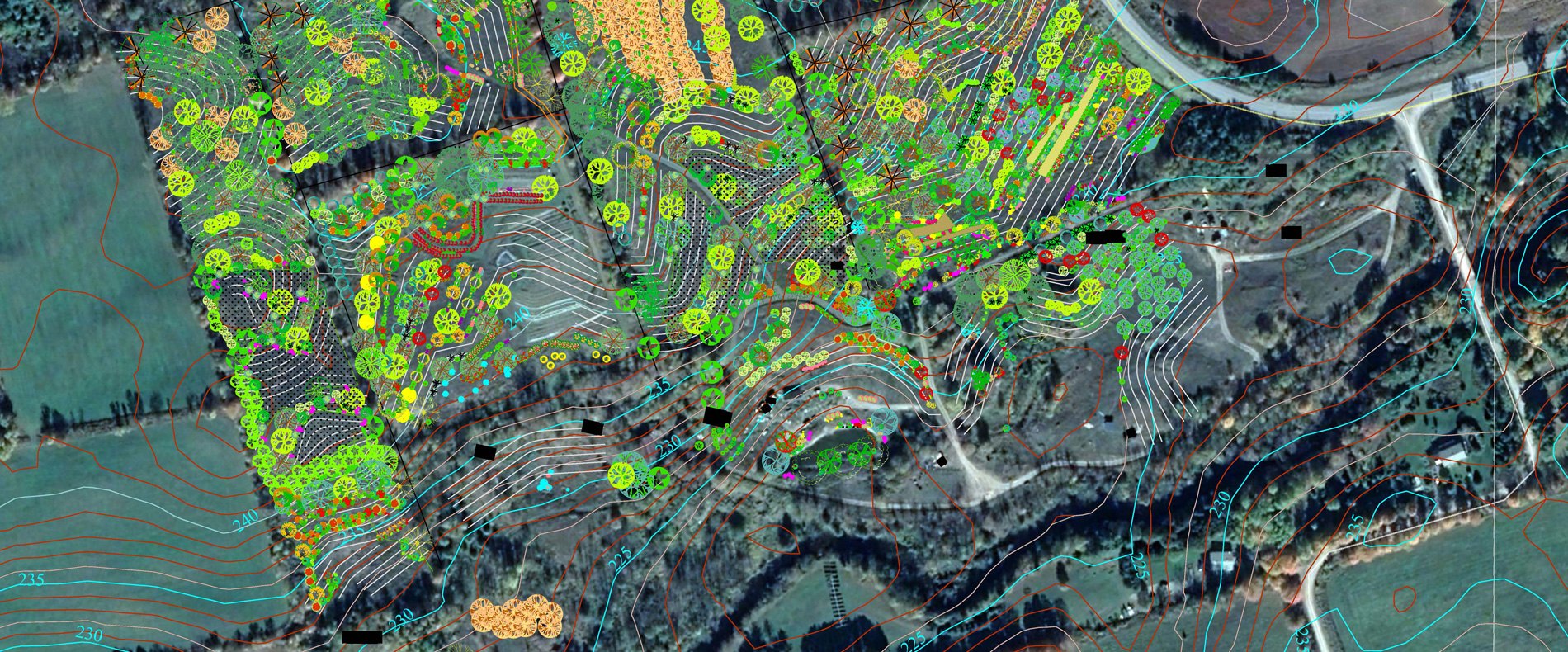 Open full-size image
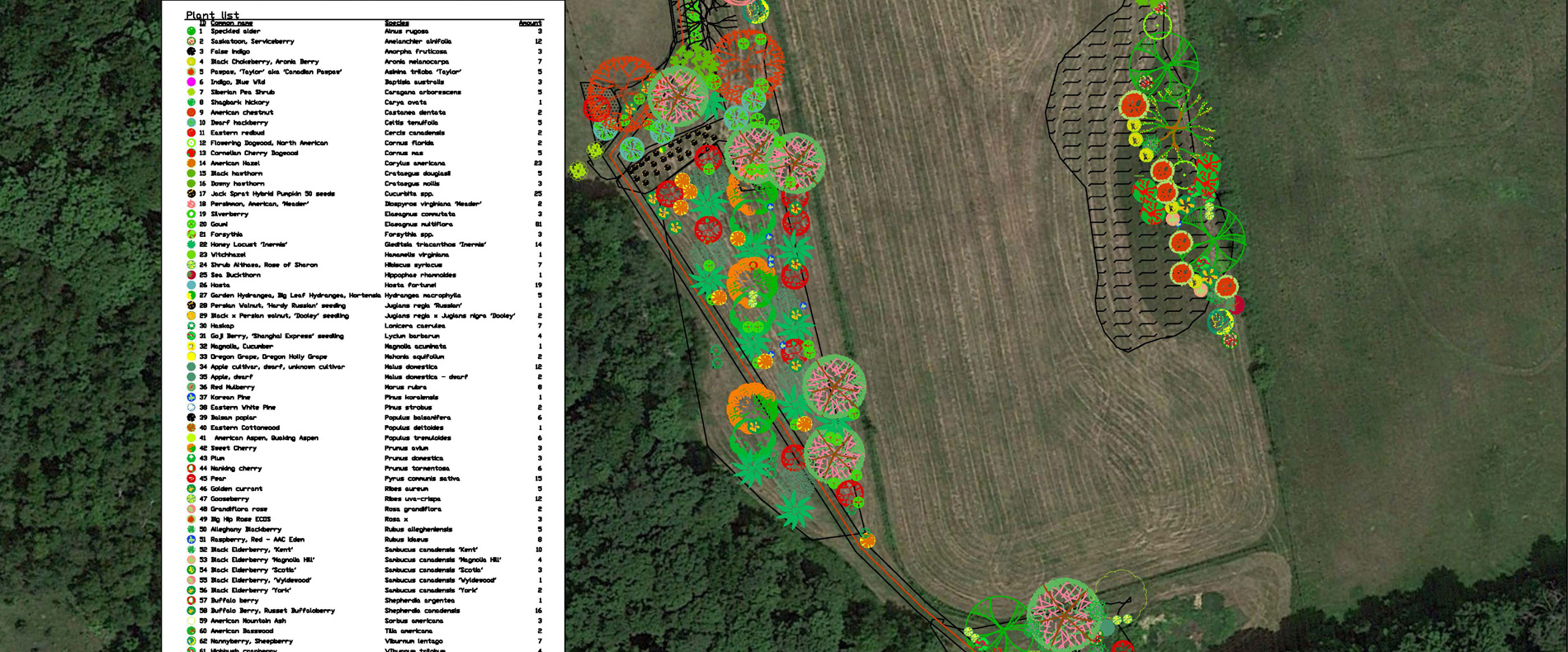
Planting areas and routes are drawn over an aerial image in this Living Landscapes farm plan. Reading the plan together with the visible landform helps you examine how access, open ground, and tree cover relate at a larger scale.
Source: Living Landscapes Design portfolio.
Read
In this course
Module 11 used this farm example when considering perennial plant relationships. Here, examine it in relation to farm-scale production, access, and ongoing work.
Open resource