Watch
Decoding Patterns Video
YouTube
If the player does not load, use the source link.
 Living LandscapesDESIGN
Module 04 / 25

What you’ll learn
Use your own copy, buy the book, or borrow it through a library when possible. If you are local to me, contact me about borrowing a copy. You can also contact me for information about digital or other access to assigned readings.
Ask about reading access ↗If your edition uses different page numbers, contact me and we can match the correct section. Contact instructor.
Watch
YouTube
If the player does not load, use the source link.
Read
permaculture.org.uk
Open resourceRead
treeyopermacultureedu.com
Open resourceWatch the Pattern Understanding video in this module.
Book reading
Dave Jacke and Eric Toensmeier
Pages 110 to 134: Garden case study and niche/relationship concepts
Book access & editionsRead
slideshare.net
Open resourceBook reading
Dave Jacke and Eric Toensmeier
Pages 64 to 140: pattern language
Book access & editionsWatch
YouTube
If the player does not load, use the source link.
Read
moodle.cce.cornell.edu
Open resourceIf you cannot access this resource, contact me for help with this reading or media.
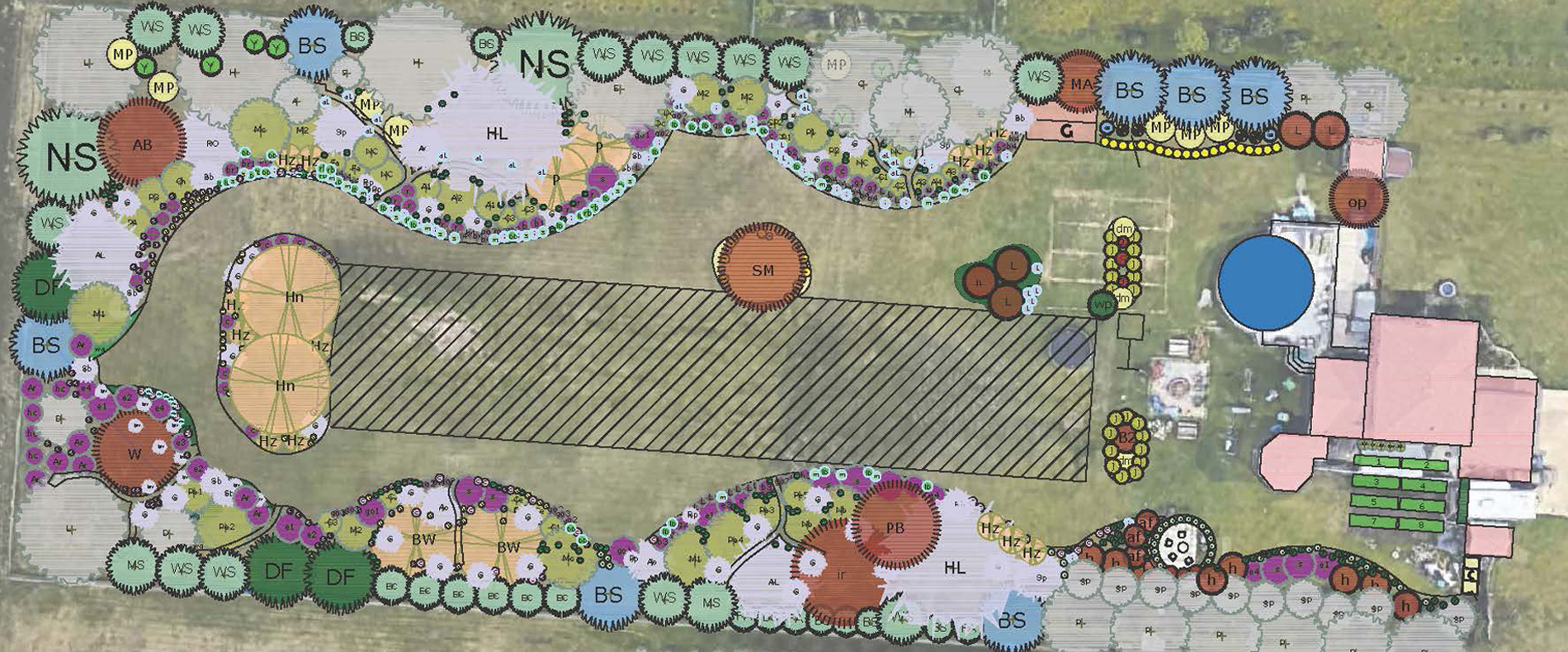
For the pattern discussion and Edge Effect exercise, annotate one pattern on your design and explain its function. Also note one reason that copying its shape might not suit your site. More edge is not automatically better for every species or habitat. Use the assigned EFG 1 pages and the linked Edge Effect reading.
Read
Deep Green Permaculture
Open resourceDiscussion: Discuss with me what natural patterns may be used in your design.
Save written notes as a document or PDF. For paper maps or handwritten notes, use a clear photo or scan. You can combine related work in one file.
Attach your annotated pattern sketch or map and explanation.
Email the address listed under “Get In Touch” on my contact page. Do not use the contact form. Include the Permaculture Design Course, Module 4, and “Patterns in your design” in your subject or message.
Find my email address ↗